Reinventing how the UN moves its people into the world's most dangerous places
UN AI Mission Planner was a new platform built from scratch for the United Nations, replacing a booking process that had no existing digital pattern to build from. Before this system, a humanitarian specialist preparing for a mission had to book flights, ground transport, and accommodation as three separate, manually coordinated processes, often into locations with no commercial infrastructure and strict security requirements. As lead designer, I designed the end-to-end mission planning experience from the ground up: turning fragmented, manual coordination into one AI-assisted, comparable itinerary workflow.
Every leg of a mission had to be a vetted UN asset, so specialists lost days coordinating separately with transport desks, accommodation teams, and country offices, then manually stitching the pieces into an itinerary and hoping nothing fell through the cracks. A single mission to a hard-to-reach location could involve a dozen legs across multiple days, with no way to see or compare options before committing to one.
I started by working with Product, Engineering, and UN stakeholders to pull the real operational constraints, security requirements, vetted transport types, and accommodation rules, out of separate departmental processes and into one shared model of what a mission actually required end to end.
My core insight was that in a crisis, the bottleneck isn't a lack of options, it's the inability to see and compare them fast enough. So instead of a linear booking flow, I designed a system built around AI-generated itinerary variants a planner could compare before committing to one.
Mapped the fragmented booking journey
That mapping exercise showed the pattern underneath the chaos: the problem was never any single booking, it was that no system existed to hold flights, ground transport, and lodging together as one journey.
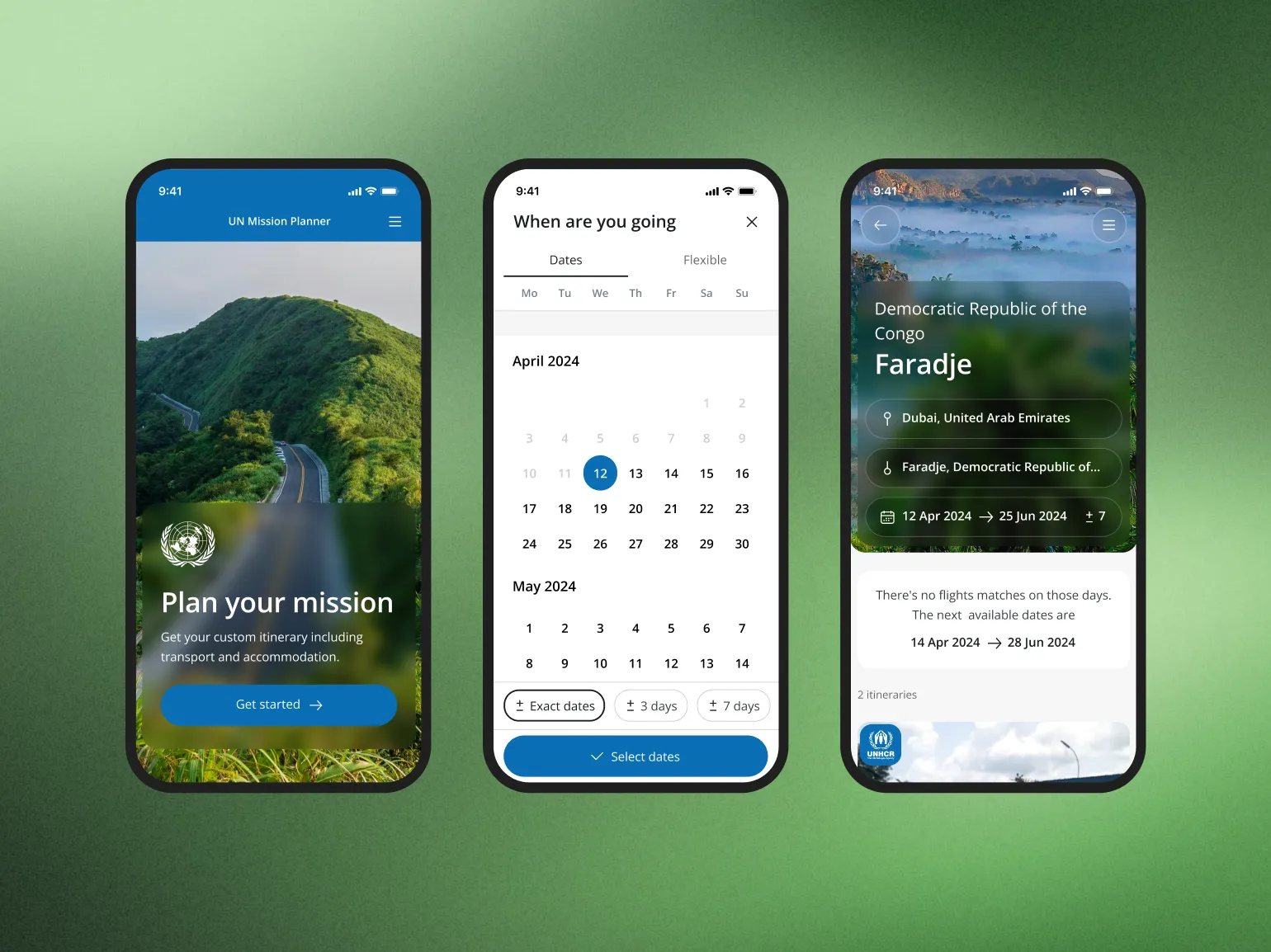
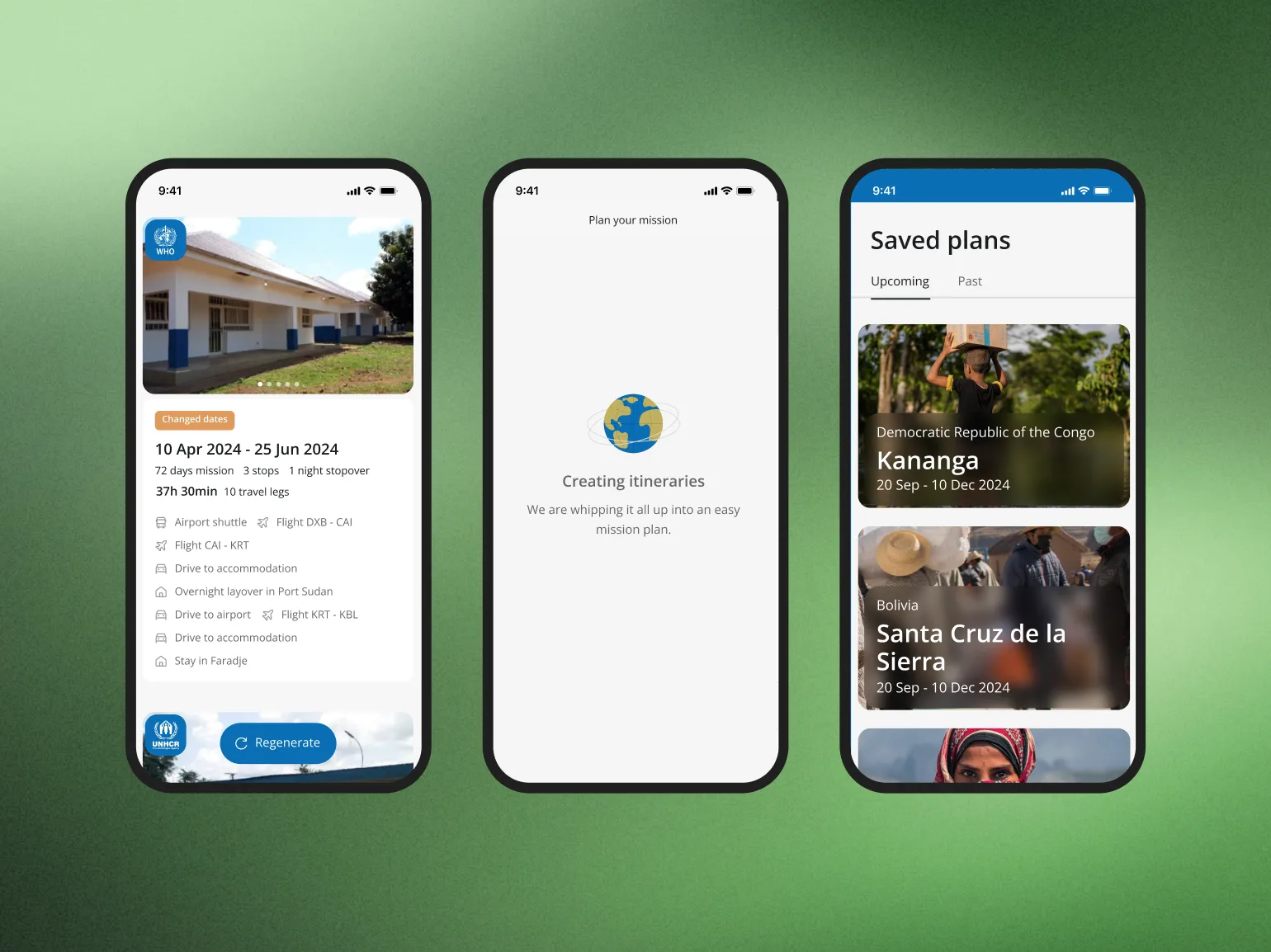
AI-generated itinerary variants
An AI layer, scans live UN transport and accommodation inventory to return several complete itineraries per journey, fastest, fewest stops, safest overnight, comparable at a glance.
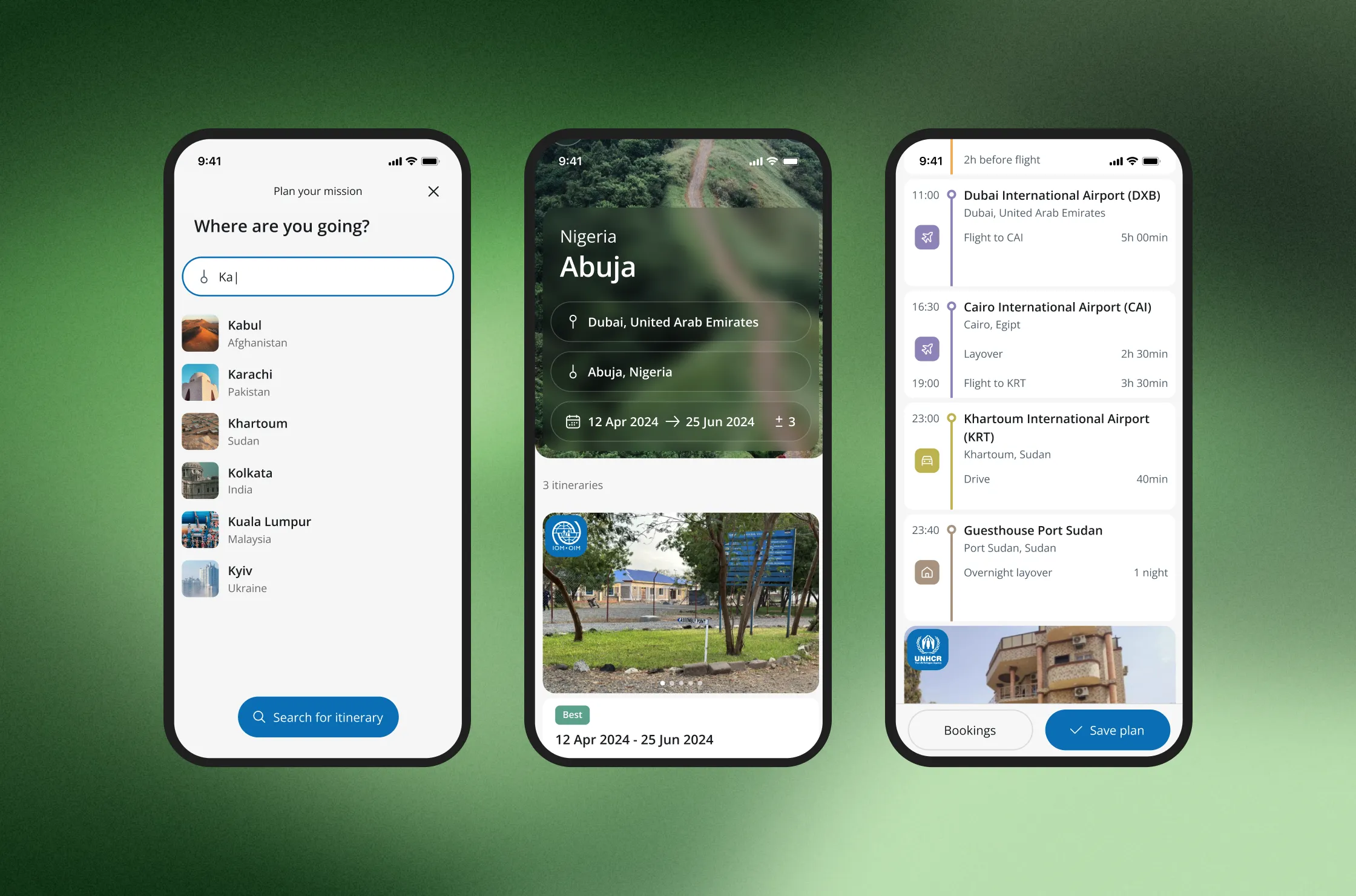
A day-by-day itinerary timeline
Complex, multi-leg missions, a shuttle, a flight, an overnight layover, another flight, break into a timestamped, mode-tagged timeline, so a 13-leg journey reads as clearly as a single flight booking.
One connected data model
Mobility and accommodation became one connected model instead of three separate tools, embedding guesthouse details, photos and safety context directly into the timeline, so the system, not the planner, kept the logistics adding up.
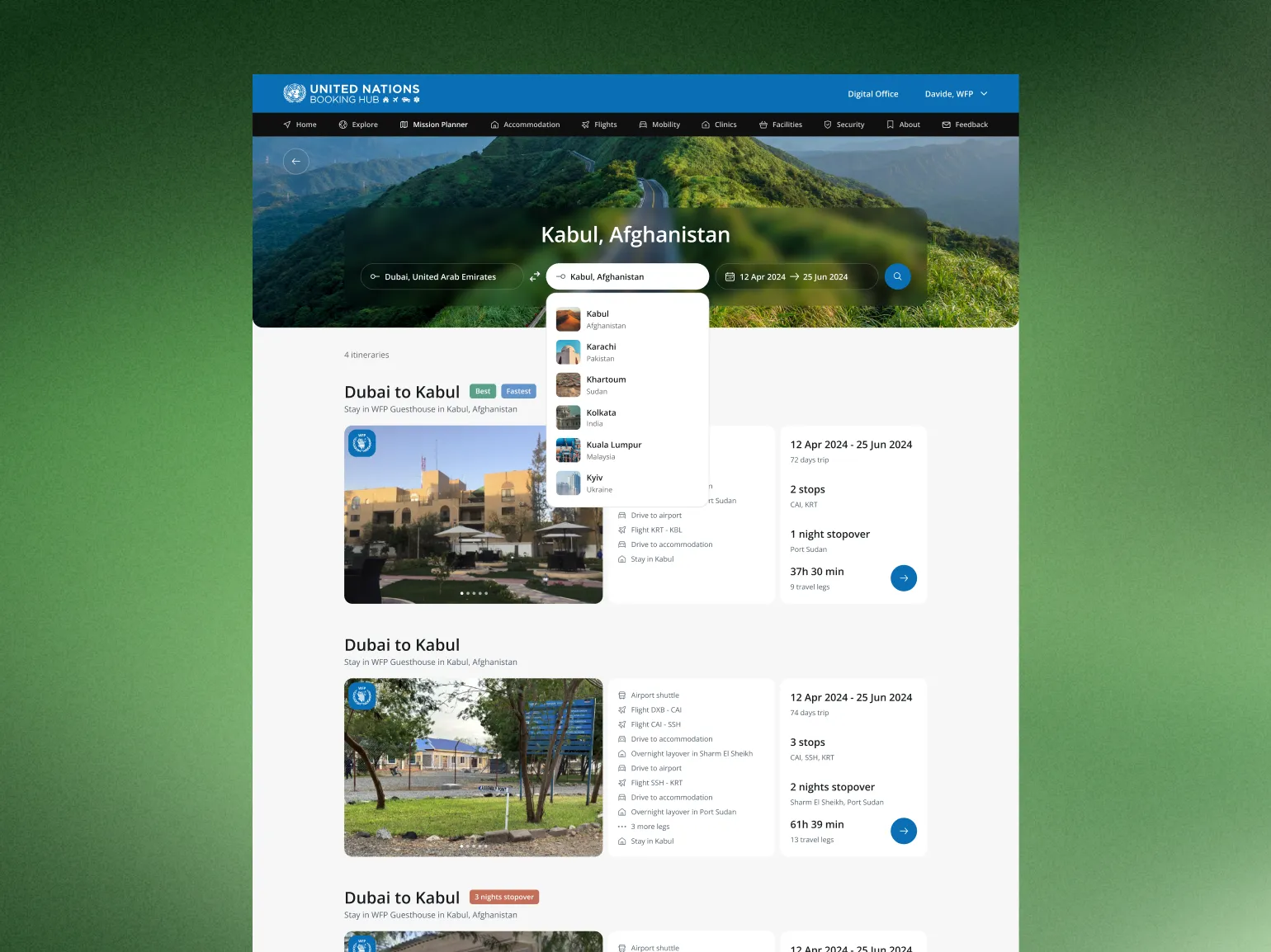
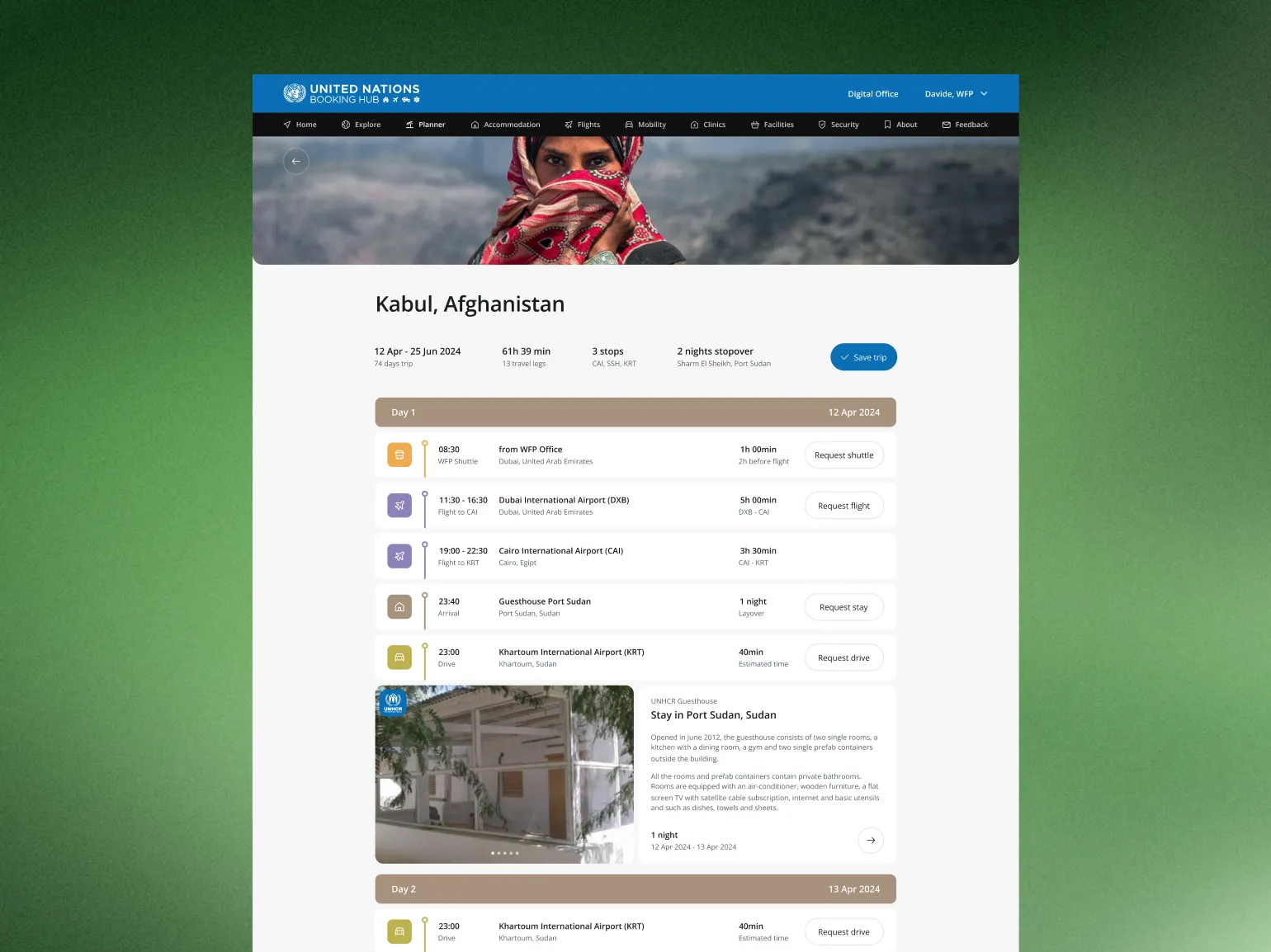
What started as a mission-planning tool became the foundation for UN AI Smart Mobility, the first UN-wide AI system built to optimize fleet and mobility utilization by turning trip data into actionable, cross-agency insight.
The platform is active in 128 countries, used by 21 UN entities, and has served 6.1 million customers, delivering $16.1M in efficiency gains in 2024, with an estimated $15M+ in additional annual savings as inter-agency mobility scales further. It's now operational across every WFP country office, rolling out to UNICEF and UNOPS, and was a finalist for the WFP 2025 Innovation Awards.
The hard part of this project was never any single screen, it was that a mission's real shape, its legs, stopovers, security constraints, and lodging, had to resolve into one coherent, comparable model rather than three disconnected booking tools. That's the core skill this project demonstrates: turning operational and logistical complexity into something a specialist under pressure can plan and trust in minutes, not days.
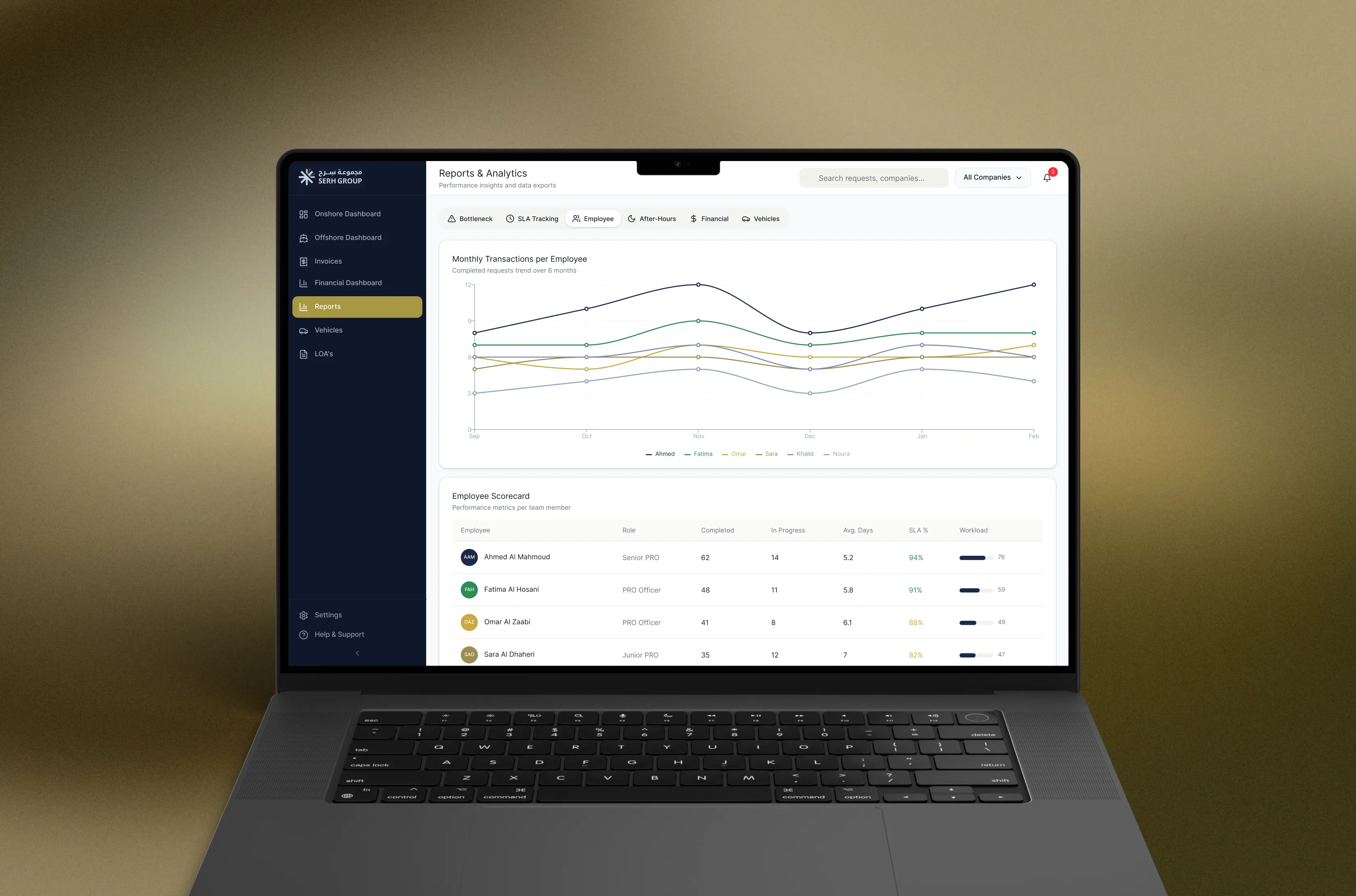
Build in code a high-security vehicle clearance system across Abu Dhabi's oil and gas sites
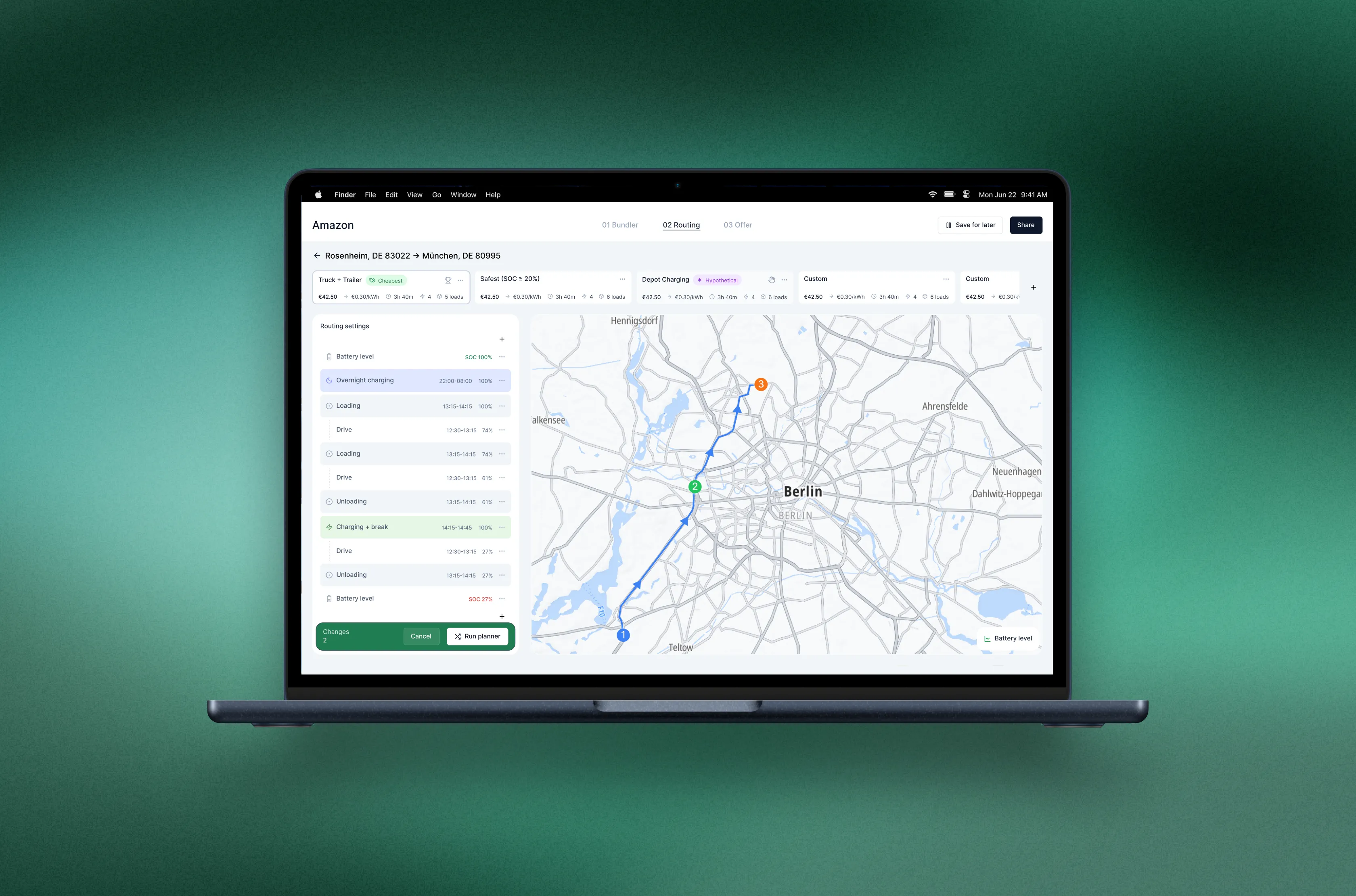
Designing the Load Bundler, the first real tool for planning electric truck fleets