Designing the Load Bundler, the first real tool for planning electric truck fleets
The Load Bundler became the first real, usable expression of JUNA.VI's vision, turning a genuinely novel problem, electrification planning across mixed fleets, into a concrete tool people could actually use to build and defend a plan. It gave the Commercial Strategy and Sales teams a faster path from request to proposal, and gave shippers and carriers a plan they could interrogate and trust rather than take on faith. Because the tool was designed around one coherent underlying plan shared across audiences, it also gave the business a foundation to extend rather than a one-off screen to redesign later.
There was no reference product to copy, because nothing like this really existed. Most design work starts with something to react to: a legacy product, a competitor, at minimum a category of dashboard to riff on. This had none of that.
Building tours from transportation data, comparing charging scenarios against each other, balancing battery level against driver stops, none of it mapped to an existing pattern. Even AI-generated design tools weren't much help here, since they're trained on familiar logistics templates, and this problem didn't fit one. Every screen had to be reasoned from the actual task, not adapted from something that already worked elsewhere.
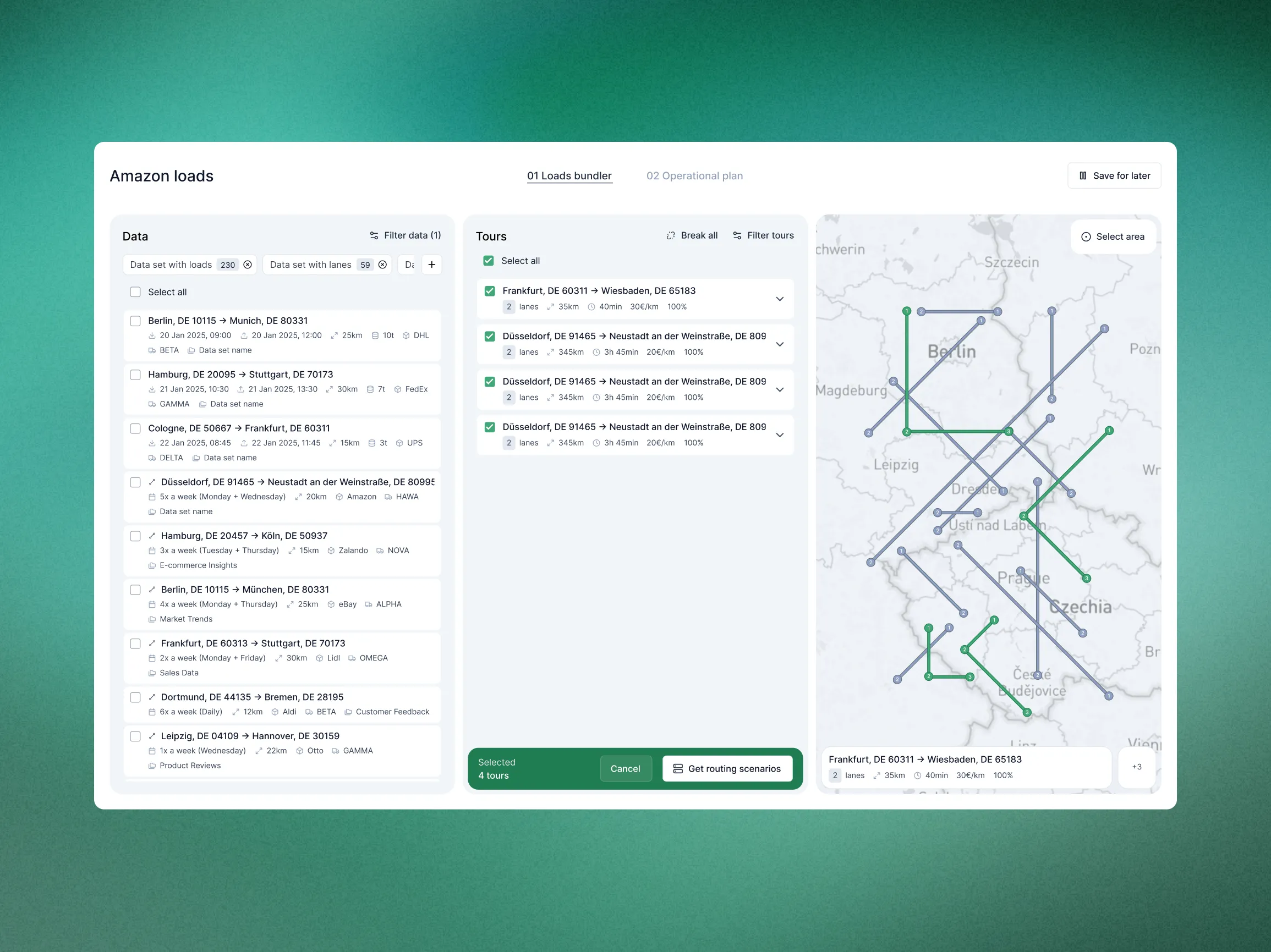
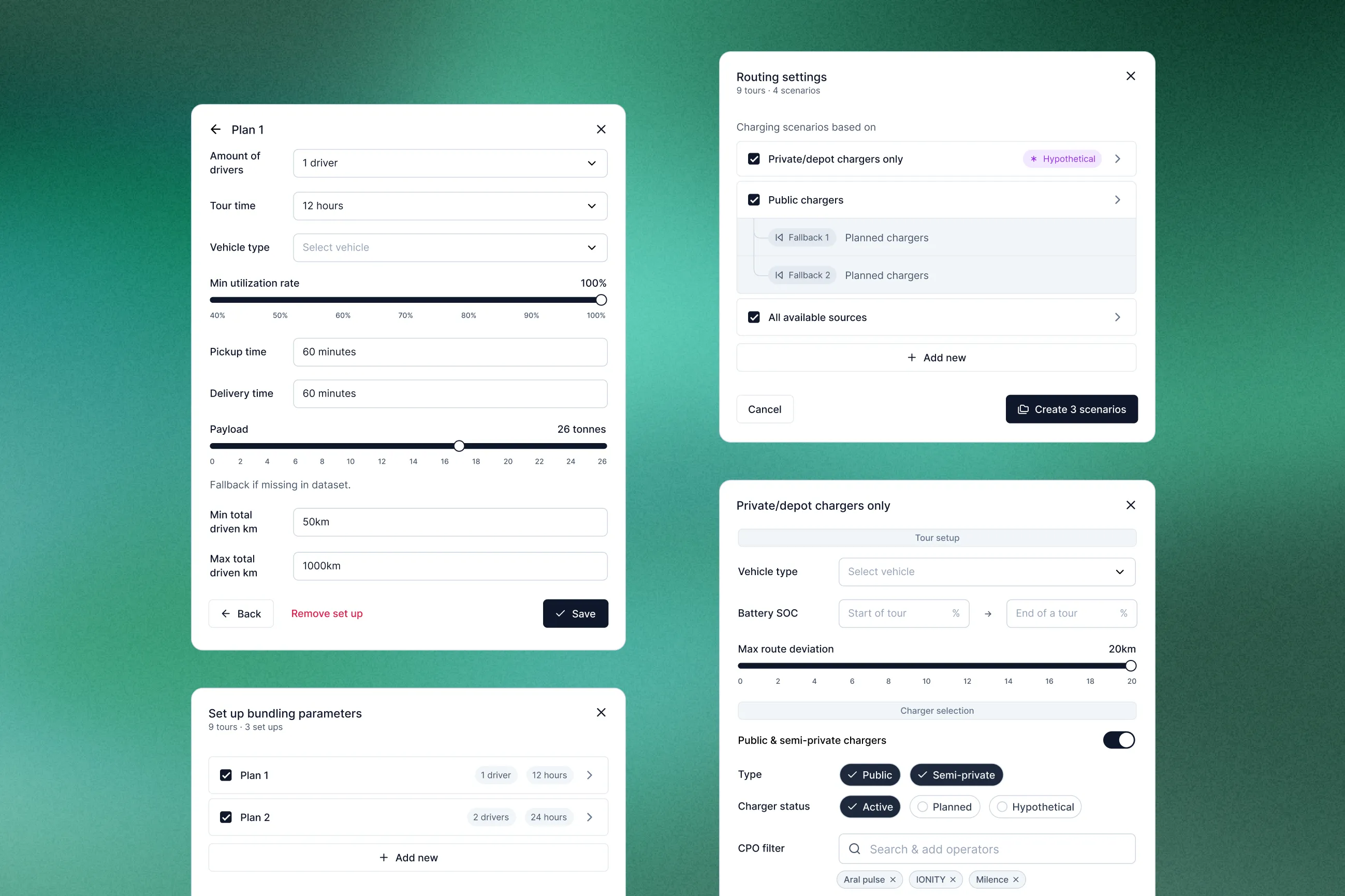
Rather than starting from a dashboard template, I started from the task itself; what a planner actually needs to decide, in what order, with what evidence. Routing settings, battery state of charge, charging and loading windows, and drive segments all had to resolve into one legible timeline instead of scattered data points.
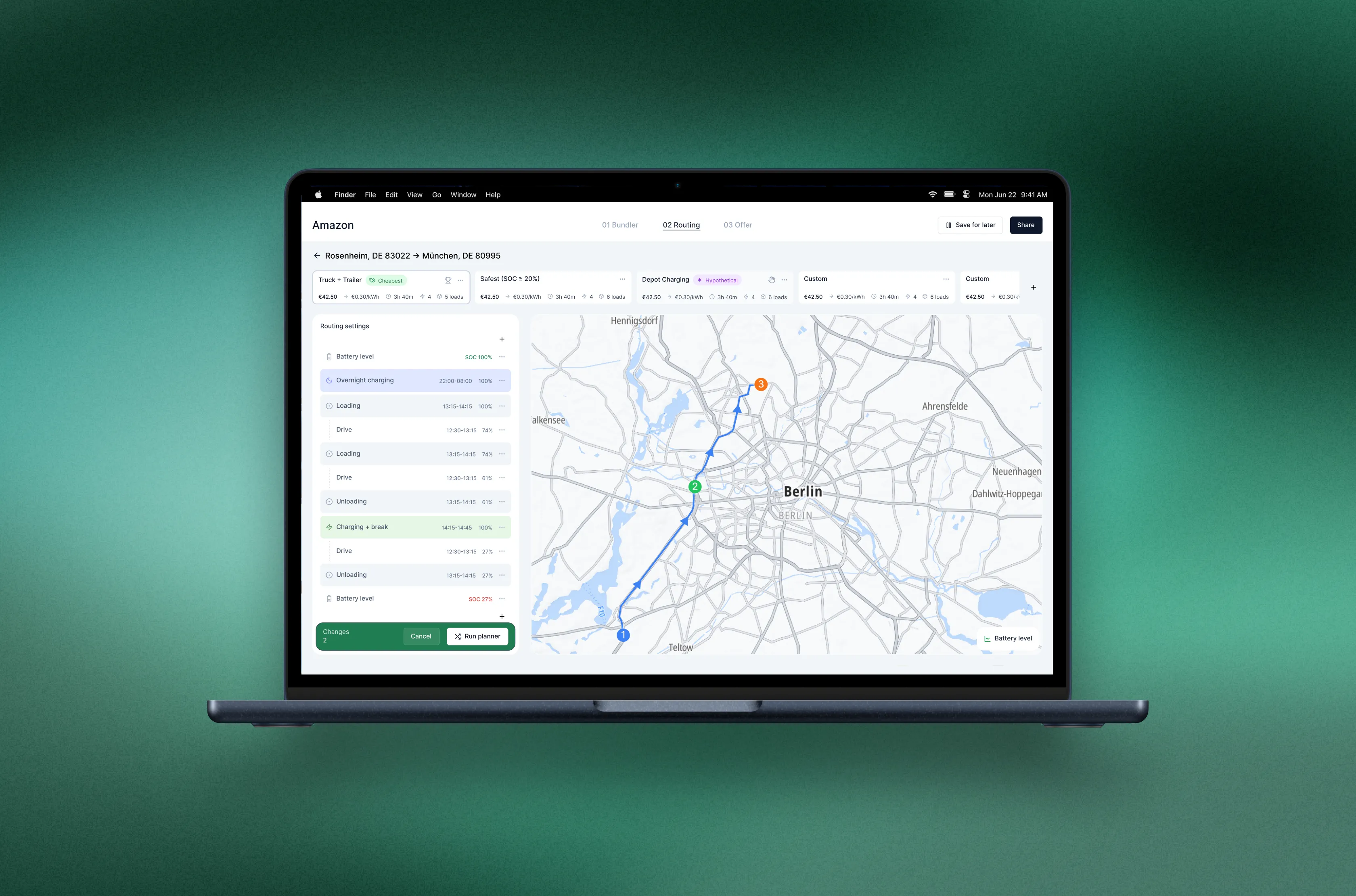
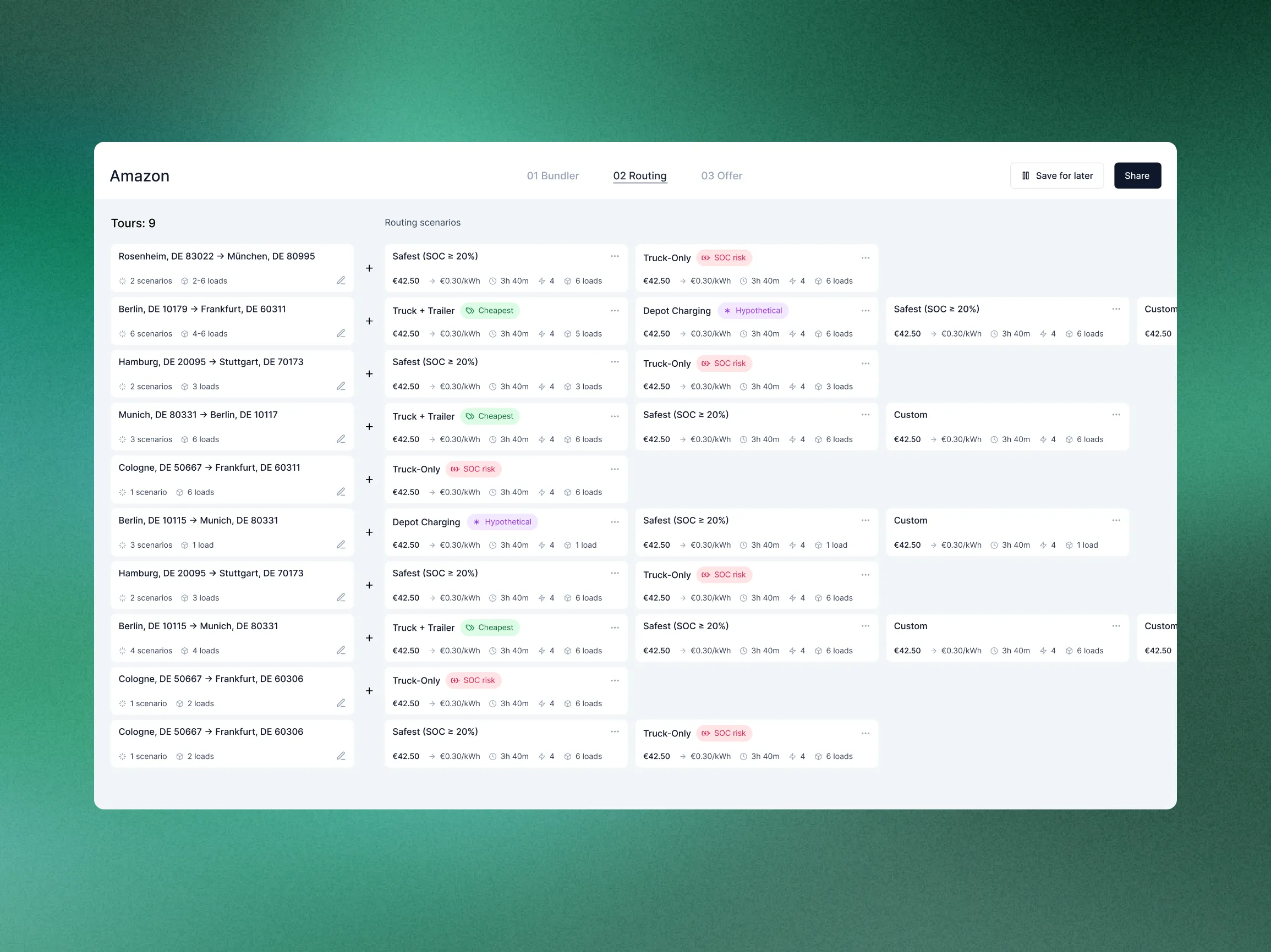
I designed the plan as something comparable by construction: multiple routing strategies (cheapest, safest, depot charging, custom) sit side by side as tabs over the same trip, so a planner can hold several trade-offs in view at once rather than re-running a black-box optimizer and hoping the output was right.
Because the same plan had to serve Commercial Strategy building a proposal, Sales presenting it externally, and a carrier or shipper interrogating it, I designed one underlying model with views that adapt to the audience, not three separate tools that could drift apart.
Comparable routing strategies
Cheapest, safest (SOC ≥ 20%), depot charging and custom strategies live as parallel tabs over the same route, each with cost, charging rate, duration and load count surfaced up front for direct comparison.
A shared timeline, not a black box
Battery level, loading, driving, charging and unloading segments render as one sequential list with SOC at each step, so a plan reads as a legible chain of cause and effect rather than an opaque score.
Map and settings as one view
Routing settings and the live route map sit side by side, so adjusting a setting and seeing its geographic and battery consequence happen in the same glance instead of a separate confirmation step.
Built to be defended, not just generated
Every number in the plan costs, kWh rate, load count, duration stays visible and editable, so a planner can walk a shipper or carrier through why the plan works, not just present a conclusion.
The Load Bundler gave JUNA.VI's Commercial Strategy and Sales teams a faster, more credible path from request to proposal, and gave shippers and carriers a plan built to be examined rather than a decision to accept on faith.
Because the tool was designed around one coherent plan shared across audiences, it became a foundation the business could extend, new routing strategies and audiences can be added to the same model instead of forking a one-off screen.
The hard part of this project wasn't any single screen, it was that no category of product existed to tell me what a screen like this should look like. That's the core skill this project demonstrates: reasoning UI from the actual task and data when there is no template, existing product, or even AI training data to lean on.
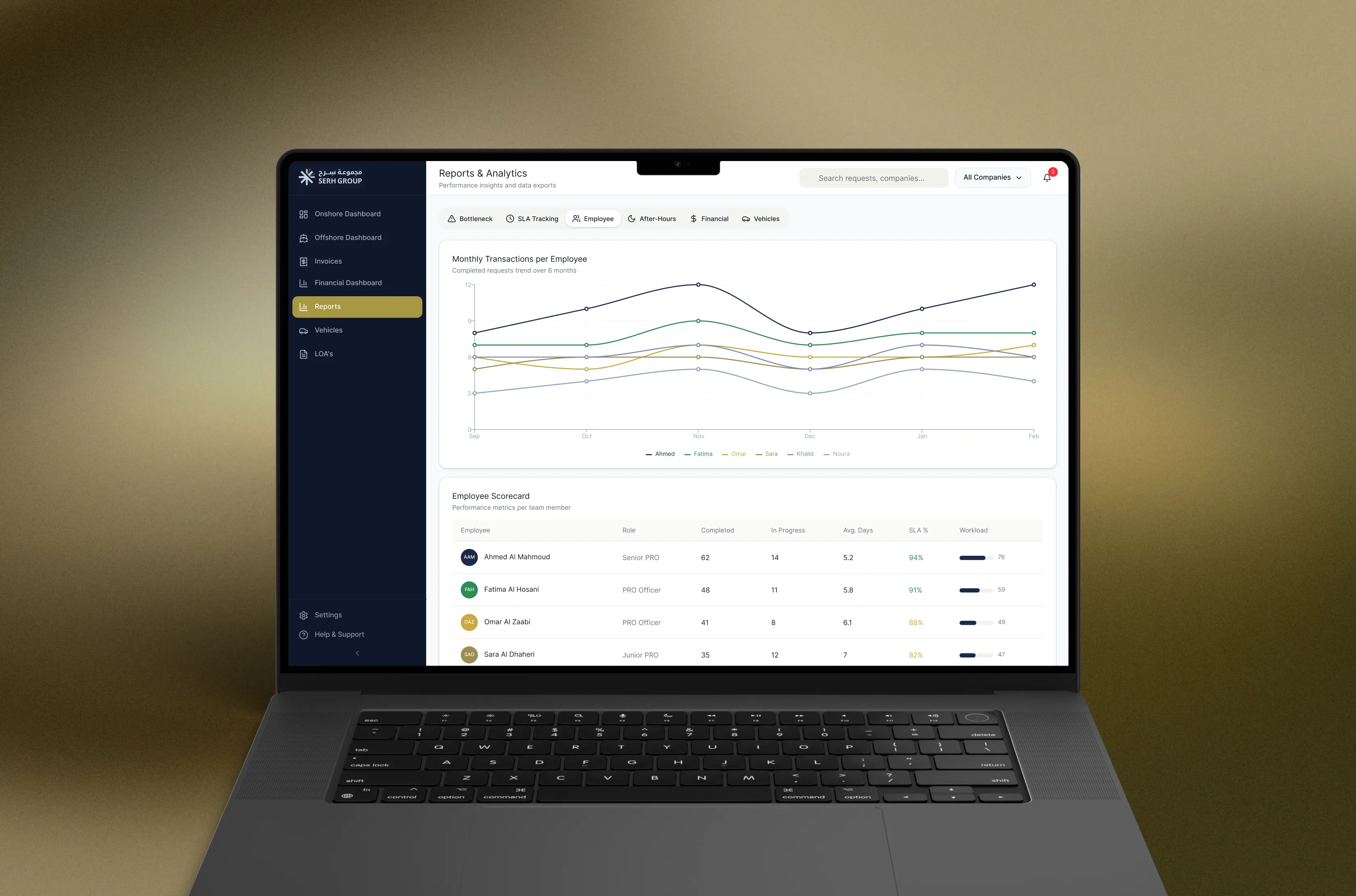
Build in code a high-security vehicle clearance system across Abu Dhabi's oil and gas sites
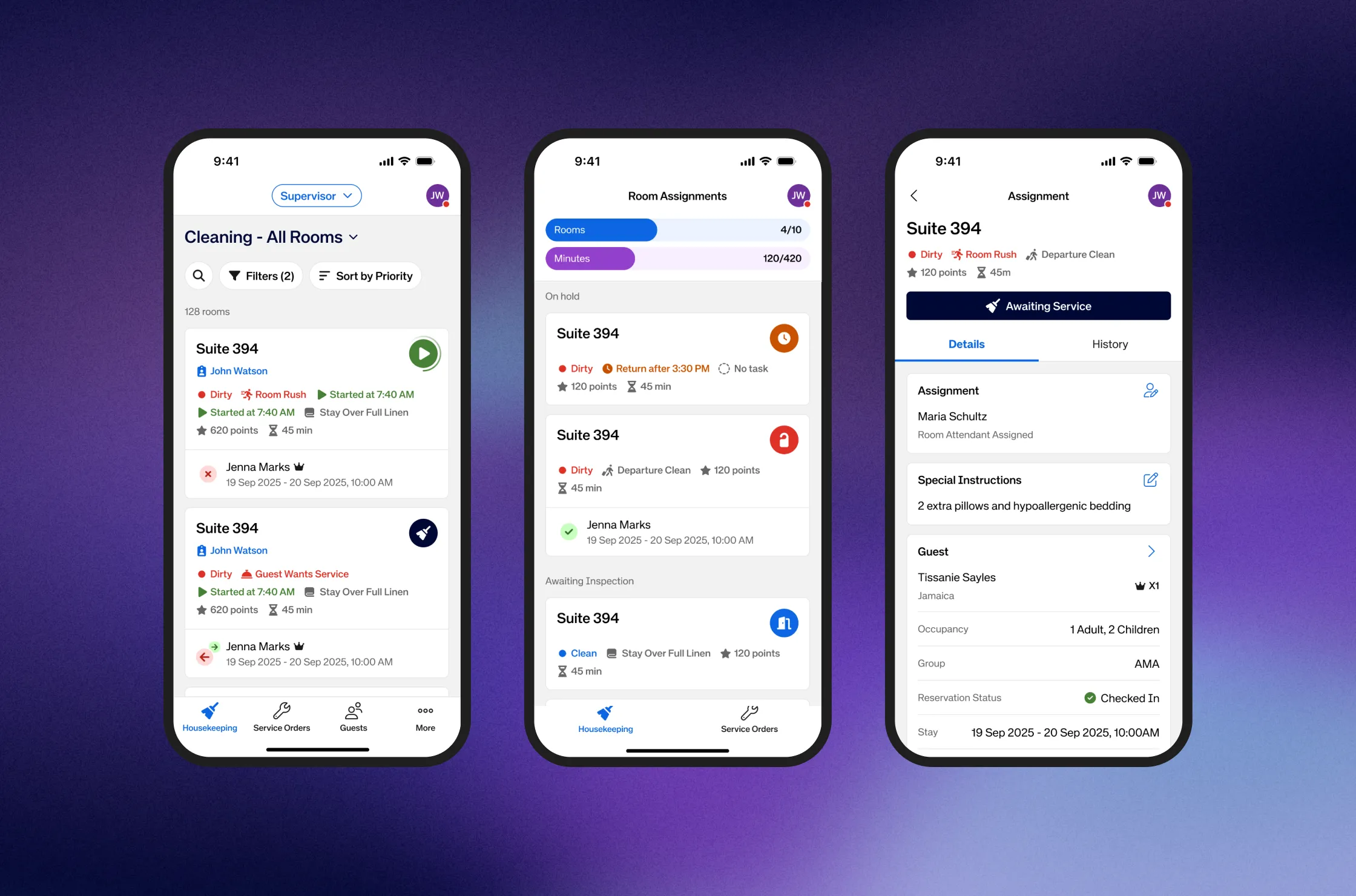
Redesigning the app, hotel frontline staff use every shift, across 2,600+ properties