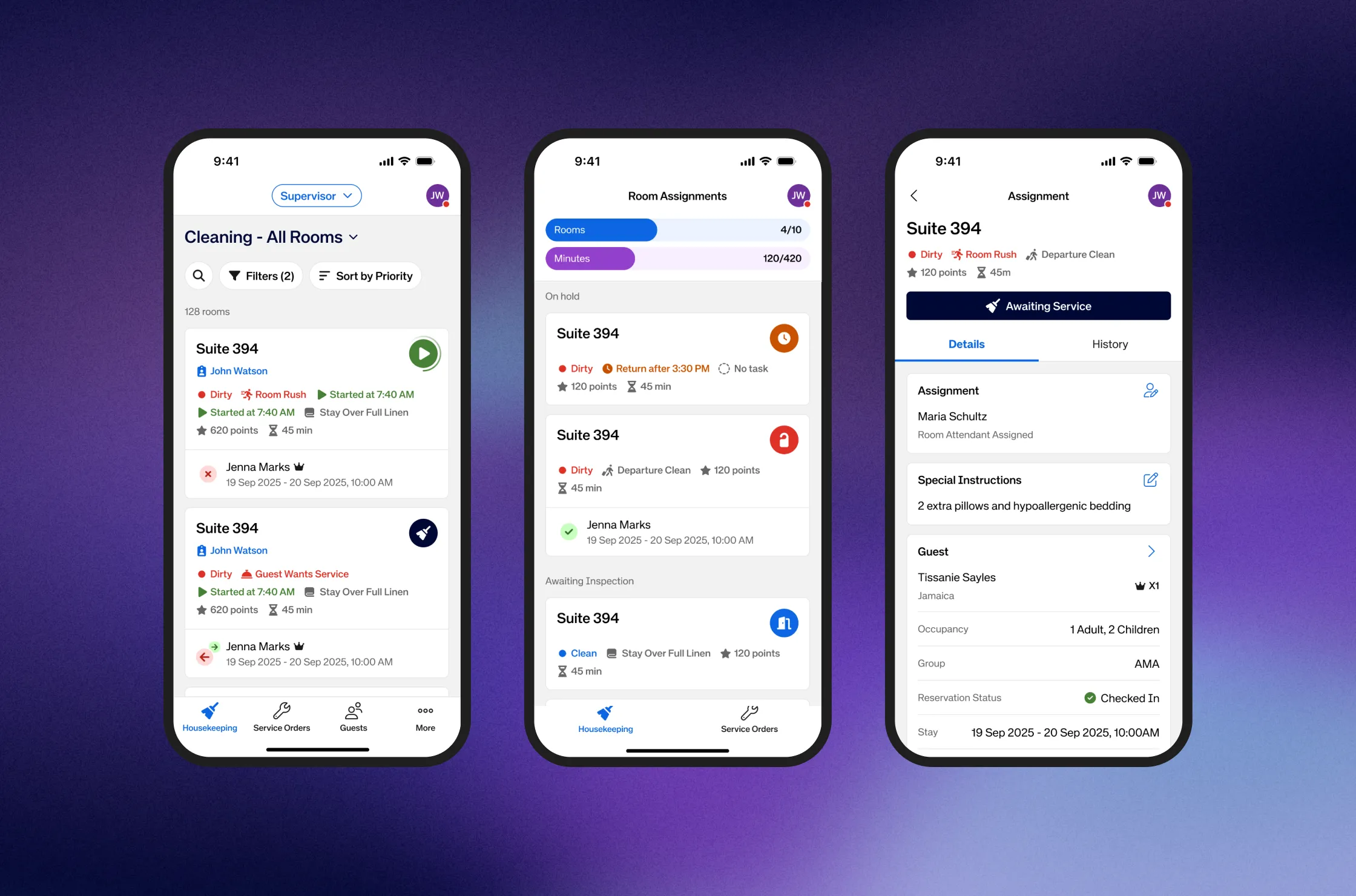
Solving compliance-heavy verification for Best Egg Vehicle Equity Loan
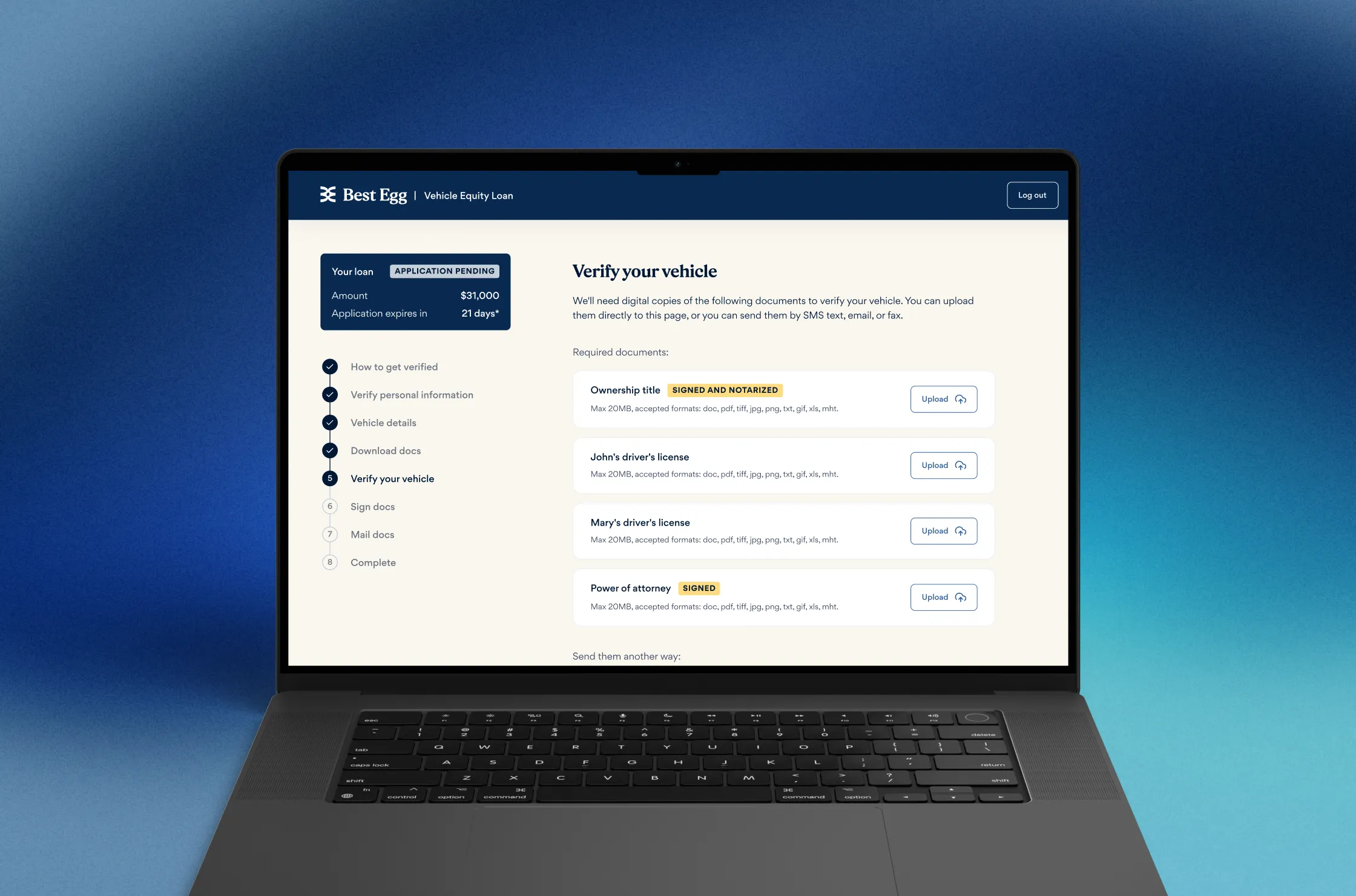
Vehicle Equity Loan was a new product launch for Best Egg, a loan type with no existing verification flow to build on, launched as the platform was scaling past $10 billion in personal loans with a 4.8/5 Trustpilot rating. I designed the end-to-end verification journey from the ground up: mapping the legal logic across nearly 50 sets of state requirements into one design template that could flex to cover every case.
Vehicle-secured lending law varies by state, almost every state has its own rules for notarization, Power of Attorney, and vehicle title verification, so there was no single "verify" flow that could work everywhere. Early data showed the risk clearly: 8% of qualified applicants failed to get funded, and 18.5% felt unsure of their application status.
I facilitated discovery workshops with Product, Engineering, and Compliance to pull the actual legal requirements out of policy documents and into a shared, working understanding of the problem, then built state-by-state user journey maps as the foundation for everything designed on top.
With the full logic mapped, I broke verification into discrete stages, identity confirmation, vehicle documentation, signing, notarization, and co-owner sign-off, and designed conditional paths through each based on a user's state and ownership status, branching only where the law required it.
One template, not fifty flows
A single verification template covered every state and ownership combination Best Egg needed, surfacing only the steps and documentation that applied as a user progressed.
Proactive status messaging
Clear in-flow messaging, e.g. when a co-owner's signature was pending. It kept users oriented without needing to call support.
Compliance-validated before launch
Worked directly with the compliance team to validate edge cases like Florida's notarization rules against the template, confirming it held up without state-specific exceptions.
Direct ID integration
Integrated a Direct ID widget into the dashboard to simplify identity confirmation, adopted by ~34% of target users.
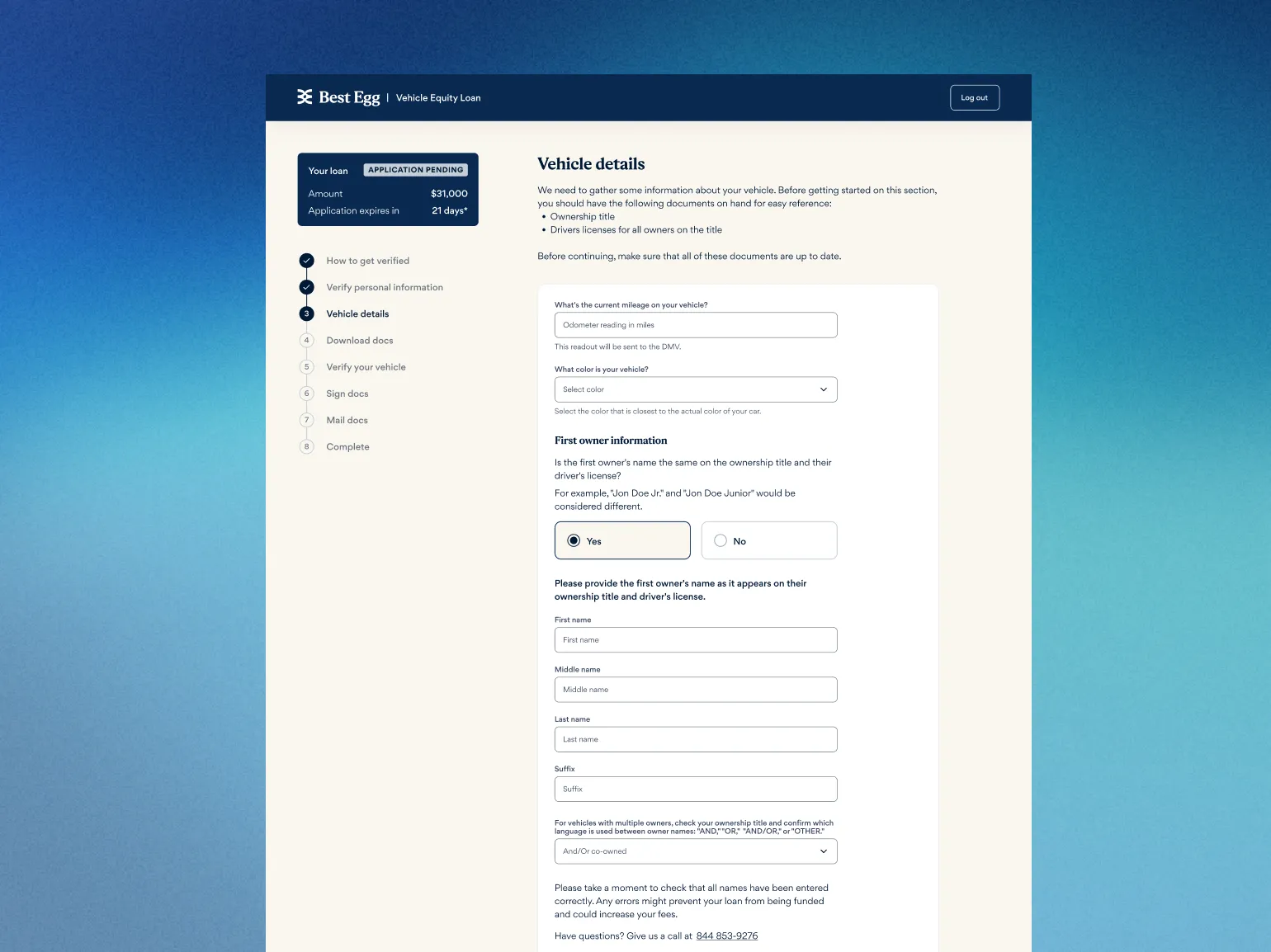
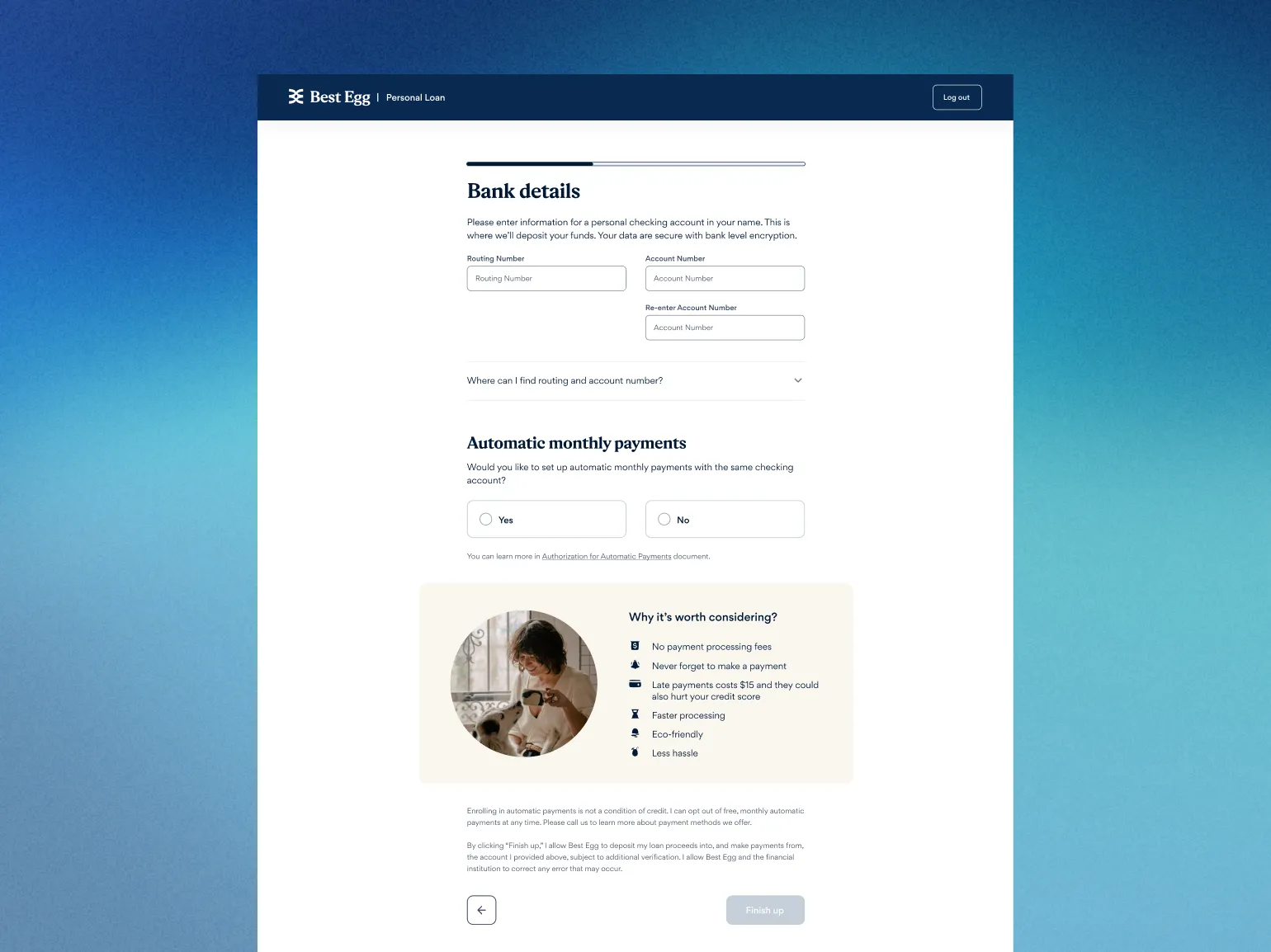
Because the verification journey was architected to prevent confusion rather than clean it up after launch, it was projected to reduce verification-related support contacts by $353K annually and lift personal loan originations for the segment by 10%, $1.5M in incremental annual NPV. The state-based logic framework became a blueprint reused elsewhere on the platform for other compliance-heavy flows.
The product line kept scaling after launch. In December 2024 Best Egg secured a $1 billion forward-flow purchase facility from AB CarVal affiliates, committed specifically to expanding vehicle equity lending, with the company having delivered more than $30 billion in personal loans by then.
The hard part of VEL was never any single screen, the underlying logic touched close to 50 different sets of state law, and all of it had to resolve into one coherent, scalable design system rather than dozens of special cases. That's the core skill this project demonstrates: turning legal and operational complexity into something a first-time user can complete without ever seeing the complexity underneath.
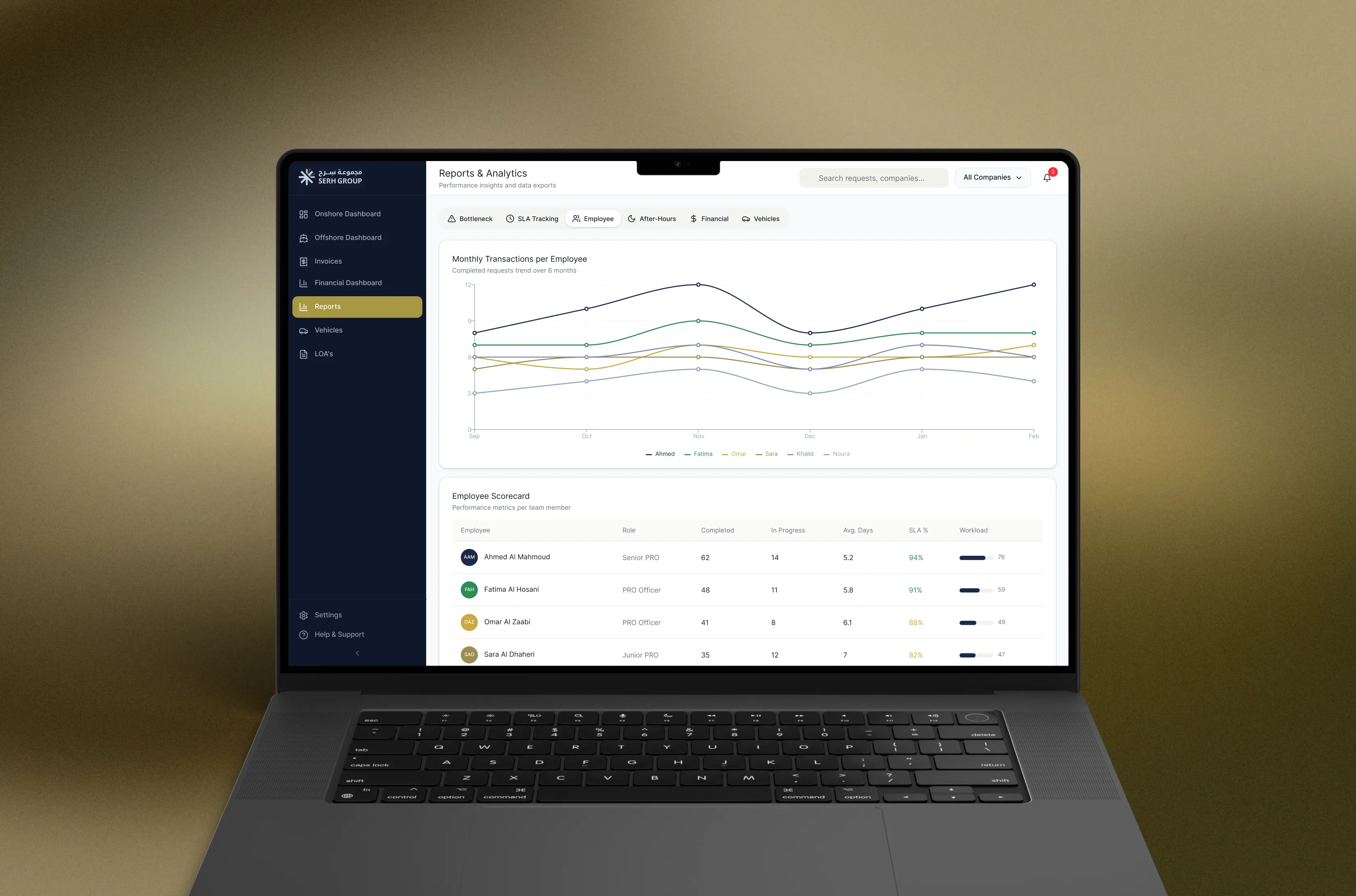
Build in code a high-security vehicle clearance system across Abu Dhabi's oil and gas sites
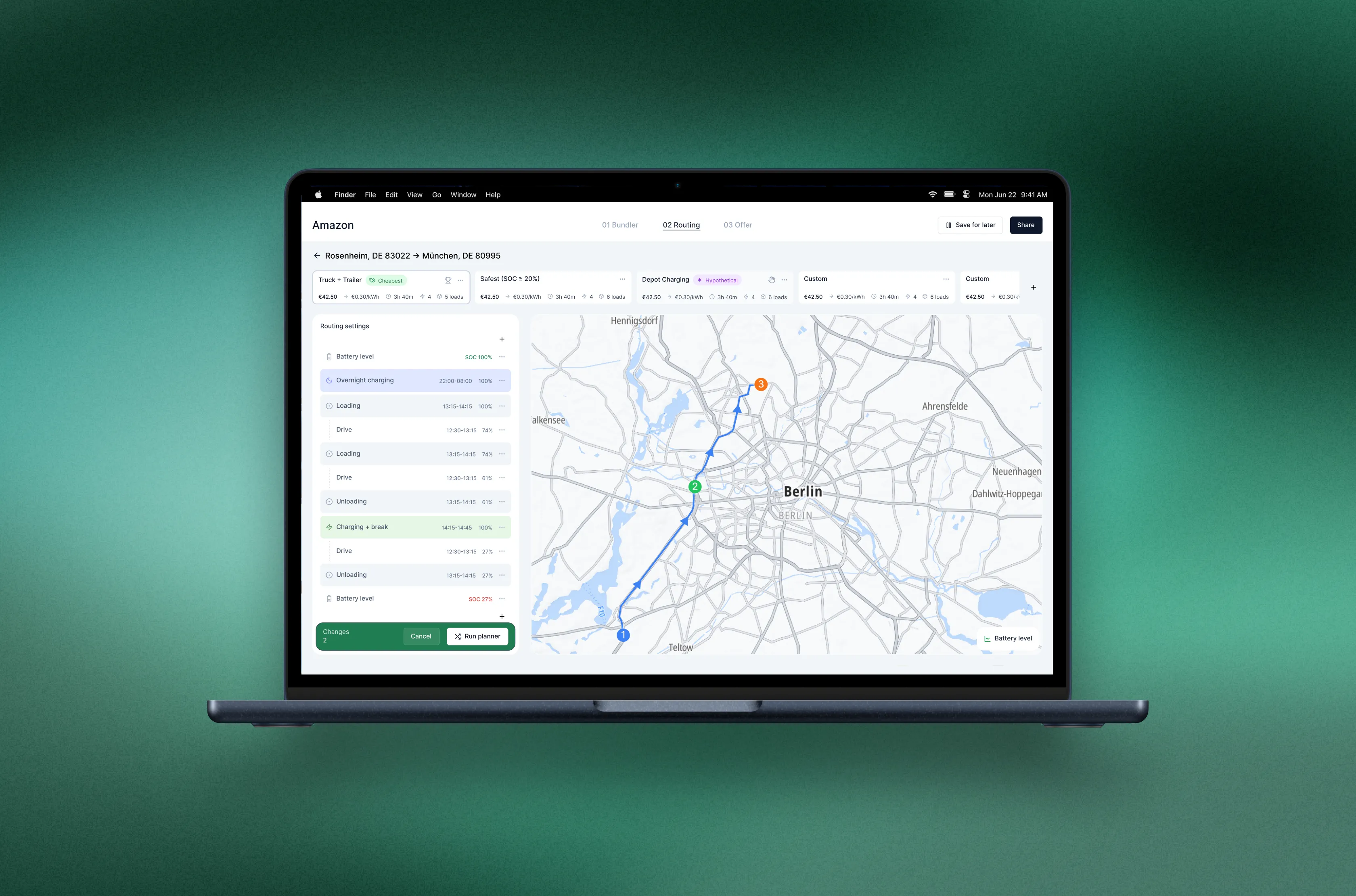
Designing the Load Bundler, the first real tool for planning electric truck fleets